
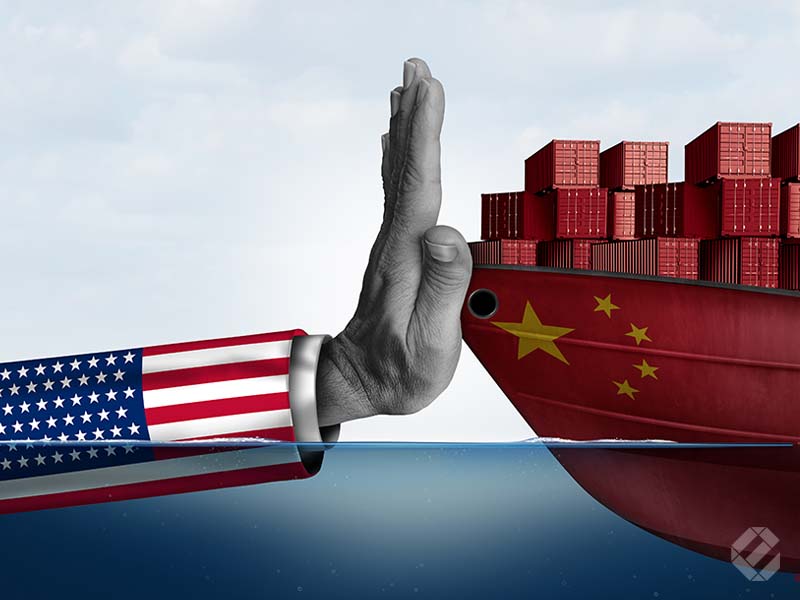
The landscape of international trade for e-commerce businesses is continually evolving. The newly adopted “One Big Beautiful Bill” is the latest change impacting e-commerce companies, with its decision to eliminate the de minimis entry privilege on a global basis. This change, set to take effect worldwide by 2027, introduces new complexities for U.S.-based e-commerce companies already grappling with the attempted immediate elimination of this crucial exemption for goods from China.
Recap: The De Minimis Exception and Its Importance
The de minimis exception, codified at 19 U.S.C. § 1321(a), allows goods valued at $800 or less to be imported duty-free into the United States. This provision has played a significant role in fostering a strong American e-commerce sector. Its evolution reflects a shift in U.S. policy towards trade liberalization, with the 2015 increase of the threshold from $200 to $800 explicitly aimed at providing “significant economic benefits to businesses and consumers” through cost savings and reductions in trade transaction costs. Congress further expressed a desire for the U.S. Trade Representative to encourage other countries to adopt “commercially meaningful de minimis values.”
For small and mid-sized U.S.-based e-commerce businesses, including many sole proprietors and local businesses, the de minimis exception has been vital. It reduces import costs by waiving duties and certain administrative fees for low-value shipments, allowing these businesses to keep prices competitive for consumers. The exemption also streamlines customs processes, leading to faster and more efficient delivery of goods and enhancing the overall appeal of e-commerce. This framework has enabled American companies to create high-skill, high-paying jobs and contribute significantly to U.S. tax revenues.
The “One Big Beautiful Bill”: A Future Without Worldwide De Minimis by 2027
The “One Big Beautiful Bill,” specifically Section 70531, which was signed into law by President Trump on July 4th, introduces significant modifications to the de minimis entry privilege for commercial shipments. This legislation establishes new civil penalties for any person who uses the de minimis privilege to introduce an article into the United States that violates any other provision of U.S. customs law. For a first violation, a civil penalty of up to $5,000 can be assessed, in addition to any other penalty permitted by law, and up to $10,000 for each subsequent violation. These penalties are set to take effect 30 days after the Act’s enactment.
More profoundly for the long-term outlook of e-commerce, the bill also mandates the repeal of the de minimis shipment exception found in Section 321(a)(2) of the Tariff Act of 1930. This crucial amendment, which effectively eliminates the de minimis exception for commercial shipments worldwide, is scheduled to take effect on July 1, 2027. This legislative action signifies a foundational shift in U.S. trade policy regarding low-value imports, moving away from a long-standing tool for trade facilitation.
The Ongoing Legal Battle Over De Minimis for Chinese Goods
While the “One Big Beautiful Bill” sets a future date for the worldwide elimination of de minimis, the e-commerce community has already been grappling with an attempted immediate elimination of the exception for goods from China. On April 2, 2025, President Trump issued Executive Order 14256, which directed that “duty-free de minimis treatment under 19 U.S.C. 1321(a)(2)(C) shall no longer be available for products of [China] (which include products of Hong Kong)” for goods entered or withdrawn from warehouse for consumption on or after May 2, 2025. The Department of Homeland Security and Customs and Border Patrol Agency subsequently confirmed this elimination via a public notice on April 28, 2025.
This executive action relied on presumed powers under the International Emergency Economic Powers Act (IEEPA), specifically Executive Orders 14185, 14200, 14256, 14259, and 14266. However, the Government took this action despite having initiated a Notice of Proposed Rulemaking (NPRM) process on January 21, 2025, inviting public comment on whether the de minimis exception should be eliminated for goods from China and other countries subject to certain ad valorem tariffs. Crucially, the subsequent public notice confirming the elimination made no mention of the ongoing rulemaking or findings by the Secretary of the Treasury, which are required by 19 U.S.C. § 1321(b) for such exceptions to be prescribed by regulations.
The EIA has been at the forefront of challenging this move. On May 29, 2025, the EIA filed an amicus curiae brief in the U.S. Court of International Trade (CIT) in the case of Axle of Dearborn, Inc. d/b/a Detroit Axle v. Department of Commerce (Case No. 1:25-cv-00091). The EIA’s brief supports the plaintiff, arguing that the Government’s purported abrogation of the de minimis exemption for goods from China is unlawful and is inflicting immediate and irreparable harm on American businesses and consumers. We contend that the action exceeds statutory authority and is “arbitrary and capricious” because it was undertaken without concluding the required notice-and-comment rulemaking process mandated by 19 U.S.C. § 1321(b) and the Administrative Procedures Act (APA). Thus, despite the passage of the One Big Beautiful Bill, the legal status of the de minimis elimination for China for the period between now and January 2027 remains under review in the courts, with significant implications for businesses that rely on imports from the region.
Adding to this legal complexity, the CIT issued a significant ruling on May 28, 2025, in V.O.S. Selections, Inc., et al. v. United States (Case No. 25-00066), which invalidated several major tariff programs, including the “Trafficking Tariffs” imposed on products from Canada, Mexico, and China. The court found that the President exceeded the authority granted by Congress under IEEPA, stating that IEEPA powers “may only be exercised to deal with an unusual and extraordinary threat” and require a more direct connection than simply imposing tariffs to create “pressure” or “leverage” on unrelated issues. While this ruling primarily concerned the legality of the tariffs themselves, it directly impacts the legal basis on which the de minimis exception was purportedly eliminated for Chinese goods, given its reliance on IEEPA. It’s important to note that this legal battle is not over. The Trump Administration has filed a notice of appeal with the U.S. Court of Appeals for the Federal Circuit, and the tariffs have been kept in place pending resolution of that appeal.
The Impact on American Businesses and Consumers
The EIA has consistently highlighted the devastating consequences of eliminating the de minimis exception. Our comments to CBP stressed that such a move would trigger a substantial increase in costs for small and mid-sized e-commerce businesses that rely on imported goods valued under $800. These added expenses, including standard tariff rates, Merchandise Processing Fees (MPF), and customs broker fees, could mean the difference between success and closure for businesses operating on tight margins. Many small businesses lack the capital reserves to absorb such tariff and fee shocks.
Beyond costs, the elimination imposes crippling administrative burdens and regulatory complexities. De minimis shipments currently benefit from simplified customs procedures, and their removal would force businesses to navigate more complex import processes, diverting valuable time and capital away from core activities like product development and marketing. This change also stifles innovation by increasing the cost and time associated with sourcing components, materials, and finished goods, and creates an uneven playing field, disadvantaging smaller businesses against larger retailers.
The impact extends directly to American consumers. Eliminating the de minimis exception translates into significant price hikes for a wide range of imported goods. Economic analyses, including CBP’s own, suggest this could result in billions of dollars in added annual costs for consumers, with consumer welfare losses estimated between $9.5 and $16.5 billion annually and a decrease in the country’s GDP. This burden disproportionately affects lower-income households, who are more likely to import de minimis shipments and would face significantly higher average tariffs.
CBP’s own analysis supports the EIA’s concerns, predicting a “substantial number of small entities are likely to be affected” and estimating net job losses between 97,000 and 136,000 jobs in the first year due to proposed rule changes. The closure of businesses and the loss of jobs represent profound, immediate, and irreparable harm, extending beyond recoverable paid duties to include diminished business value, loss of goodwill, and damage to reputation.
EIA’s Advocacy
The Ecommerce Innovation Alliance will continue to closely monitor these developments, advocating strongly for policies that promote a stable and predictable trade environment essential for e-commerce growth. We firmly believe that while legitimate concerns regarding illicit trade and intellectual property violations need to be addressed, blanket elimination of the de minimis exception is a harmful and disproportionate solution.