
Skip to content

(202) 240-7890

Ecommerce Innovation Alliance (EIA)
  • Home
  • About
  • Blog
  • Issues
    • Telemarketing Laws
    • Import Tariffs
    • Protecting AI and RCS
    • ADA Litigation
    • Texas Senate Bill 140
  • Contact
JOIN
Home » Blog » Standing Up for Small Business: EIA Fights to End Abusive Email Litigation in Washington State

Standing Up for Small Business: EIA Fights to End Abusive Email Litigation in Washington State

Ecommerce Innovation Alliance

January 14, 2026

Legislative Update

Standing Up for Small Business: EIA Fights to End Abusive CEMA Email Litigation in Washington State

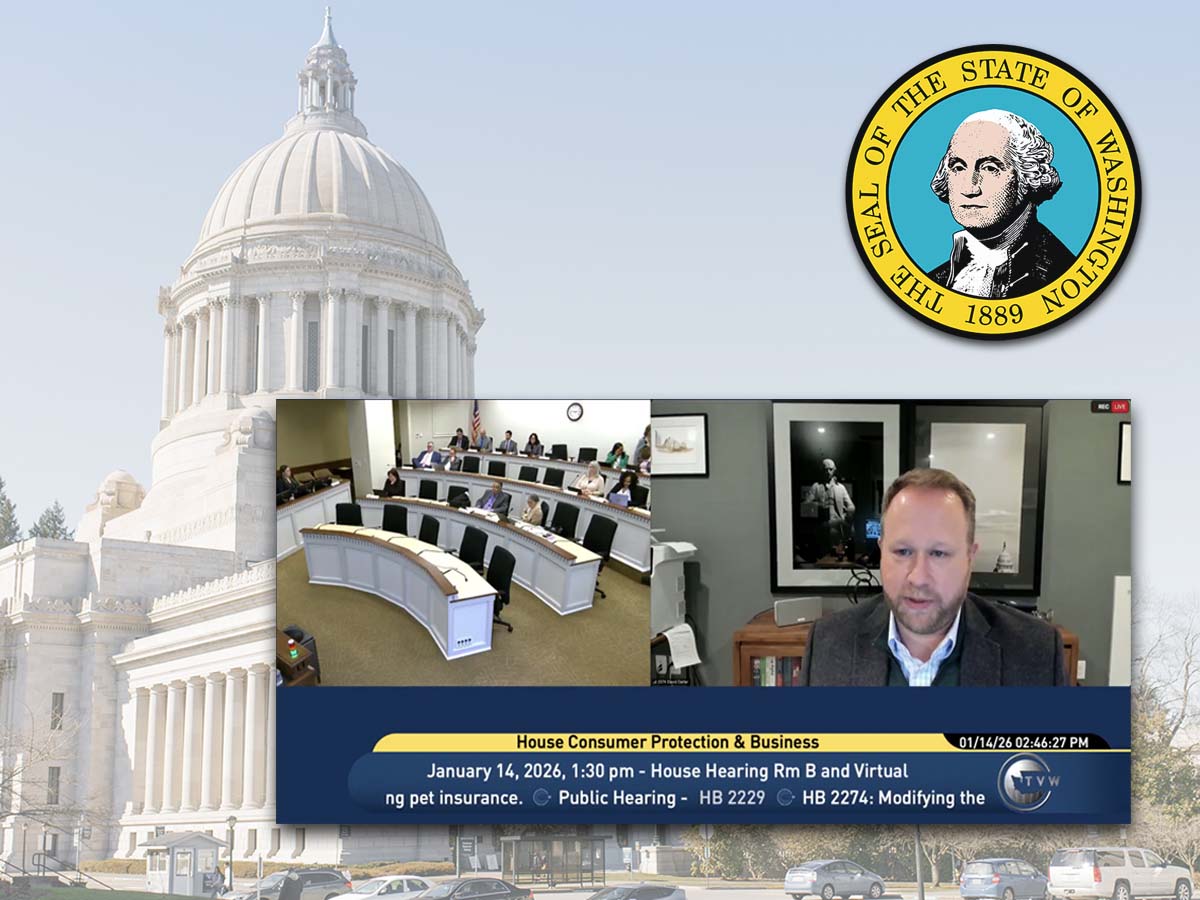
Today, the Ecommerce Innovation Alliance (EIA) joined the Washington Retail Association (WRA) and business leaders from across the state to advocate for an end of frivolous email litigation under Washington’s Commercial Electronic Mail Act (CEMA).

In a hearing before the House Consumer Protection and Business Committee, EIA President & CEO David Carter delivered crucial testimony in support of HB 2274, a bipartisan bill that EIA helped WRA craft in order to fix a quickly escalating litigation crisis impacting ecommerce businesses nationwide.

The Crisis: When “Last Chance” Means a Lawsuit

Since the Washington Supreme Court’s decision in Brown v. Old Navy in April 2025, Washington’s anti-spam statute has been weaponized. A law originally written in 1998 to protect consumers from deceptive, anonymous spammers is now being used to punish legitimate businesses for standard marketing practices.

The Court’s ruling created a strict liability standard where any technical inaccuracy in an email subject line—such as a sale being extended after a “deadline”—can trigger statutory damages of $500 per email. Crucially, plaintiffs do not need to show they opened the email, read it, or were harmed in any way.

The result has been an explosion of predatory litigation. In just six months, 75 lawsuits have been filed against retailers, driven largely by out-of-state law firms seeking massive settlements for technicalities that caused no consumer injury.

The Hearing: A Broad Coalition for Reform

At today’s hearing, the EIA joined a broad coalition, including Washington Retail Association (WRA), the Association of Washington Business (AWB), and representatives from the hospitality industry, to urge the Committee to pass HB 2274. This legislation would restore sanity to the law by introducing a “materiality” requirement and ensuring that statutory damages are reserved for consumers who are actually harmed by deception.

In his testimony, EIA’s David Carter highlighted the devastating impact this legal environment has on small businesses, sharing the hypothetical but all-too-realistic story of a “stay-at-home mom” running an online boutique.

“She operates out of her garage… sends an email with the subject line: ‘Flash Sale Ends Midnight.’ At 11 PM, realizing she still has excess inventory… she decides to extend the sale… Under the current interpretation of CEMA, that act of extending the sale renders her ‘Midnight’ subject line retroactively ‘misleading.’… She has just created a class action liability of one million dollars.”

Carter emphasized that these lawsuits are not about consumer protection, but about exploiting ambiguity.

The “Glass House” of Political Fundraising

Carter also drew a sharp contrast between the standards applied to businesses and those used in political fundraising. He asked Committee members to reflect on their own “Midnight Deadline” fundraising emails sent during election cycles—deadlines often set for momentum rather than legal necessity.

“If you think that CEMA is a fair system… then I would implore you . . .  to extend it… to include political solicitation emails. If not, then I urge you to support HB 2274.”

What HB 2274 Does

The proposed amendments are simple and fair. They do not strip away protections for consumers who are misled. Instead, they:

  1. Require Materiality: Ensure that actionable misrepresentations are those that actually matter to a reasonable consumer.
  2. Require Harm for Statutory Damages: Prevent windfalls for plaintiffs who never opened or relied on the email.

Next Steps

The EIA is committed to seeing this legislation through. We cannot allow Washington to become a jurisdiction where a harmless email subject line carries a death sentence for small businesses.

We thank Chair Walen and Ranking Member McClintock for hearing our testimony, and we thank our partners at the Washington Retail Association and Meegan Brooks of Benesch Law for their leadership on this critical issue.

Join the EIA today to help strengthen and shape policies that affect all ecommerce businesses. Together, we can continue to create the future of ecommerce. Subscribe to EIA email updates to stay informed on key developments and their impact on your business. 

SHARE THIS POST:
Photo of author
Ecommerce Innovation Alliance
The voice of ecommerce
EIA is a nonprofit trade association dedicated to bringing the e-commerce industry together to advocate for common sense policies that strengthen the ecommerce ecosystem while protecting consumer’s privacy.
All posts by Ecommerce Innovation Alliance
Brown v. Old Navy, CAN-SPAM, Commercial Electronic Mail Act (CEMA), Ecommerce Innovation Alliance, EIA, EIA President & CEO David Carter, email marketing, email subject lines, emails, Famous Footwear, Frivolous Lawsuits, HB 2274, House Bill 2274, MASS. GEN. LAWS ch. 93, Massachusetts, Massachusetts Chapter 93A, promotional emails, SB 5976, Senate Bill 5976, spam, spam email, spam messages, Washington Retail Association (WRA), Washington State
←Previous Post
Next Post→
The Ecommerce Innovation Alliance logo featured in white
contact

303 W. Broad Street
Suite 306
Richmond, VA 23220

(202) 240-7890

info@ecomm-alliance.org

MENU

Home

About

Blog

Issues

Contact

Member Login

Member Support

Join Our Newsletter

Subscribe to the EIA Email Newsletter for the latest ecommerce industry news and vital legal, regulatory and legislative updates.

SUBSCRIBE

© 2026 Ecommerce Innovation Alliance. All Rights Reserved.

Privacy Policy

Cookie Policy

Terms of Service

Accessibility Simplified Summary: This is the website for Ecommerce Innovation Alliance (EIA). It is a special group that helps e-commerce business owners. Think of EIA as the main voice or speaker for stores that sell things online. They want to make the smart laws and rules for online shopping that are clear and fair for everyone. They work on some important things for online businesses like rules about calling customers, rules for things coming from other countries, helping make sure computer usage is safe, and making websites easy for people who need extra help to use them. Read our full Accessibility Policy.

  • Home
  • About
  • Blog
  • Issues
  • Contact
  • Join EIA
  • Log In
Ecommerce Innovation Alliance logo
MANAGE CONSENT
To provide the best experiences, we use technologies like cookies to store and/or access device information. Consenting to these technologies will allow us to process data such as browsing behavior or unique IDs on this site. Not consenting or withdrawing consent, may adversely affect certain features and functions.
Functional Always active
The technical storage or access is strictly necessary for the legitimate purpose of enabling the use of a specific service explicitly requested by the subscriber or user, or for the sole purpose of carrying out the transmission of a communication over an electronic communications network.
Preferences
The technical storage or access is necessary for the legitimate purpose of storing preferences that are not requested by the subscriber or user.
Statistics
The technical storage or access that is used exclusively for statistical purposes. The technical storage or access that is used exclusively for anonymous statistical purposes. Without a subpoena, voluntary compliance on the part of your Internet Service Provider, or additional records from a third party, information stored or retrieved for this purpose alone cannot usually be used to identify you.
Marketing
The technical storage or access is required to create user profiles to send advertising, or to track the user on a website or across several websites for similar marketing purposes.
  • Manage options
  • Manage services
  • Manage {vendor_count} vendors
  • Read more about these purposes
View preferences
  • {title}
  • {title}
  • {title}