
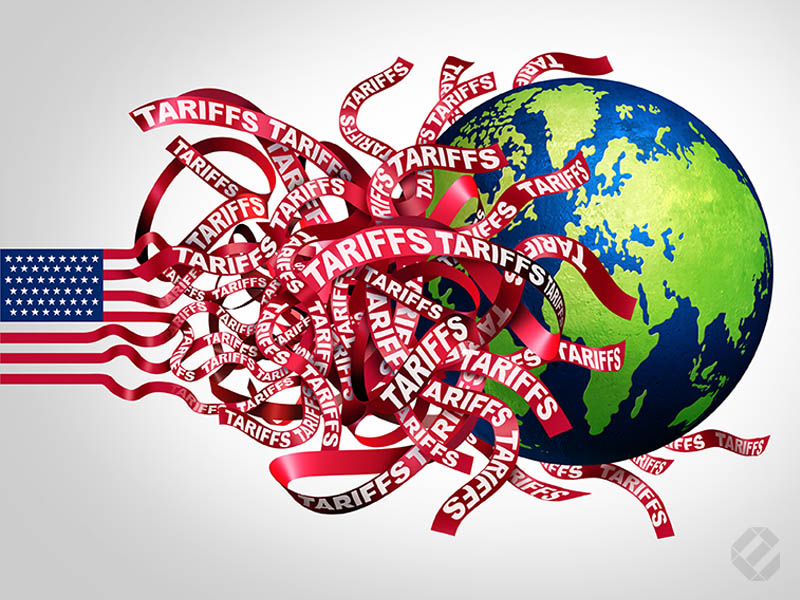
Trump Administration Rebuilds Tariff Program Under New Legal Authority—But the Court Battles Continue
August 3, 2026
On July 24, 2026, the Trump Administration's temporary Section 122 tariffs expired after reaching their 150-day statutory limit. But rather than allowing those tariffs to lapse, the Administration announced a replacement program one day earlier under Section 301 of the Trade Act of 1974.…
READ FULL POST

Federal Judge Rejects CIPA Pixel Lawsuit Lacking Evidence of Genuine Privacy Harm
July 9, 2026
For the past several years, ecommerce businesses have faced an onslaught of lawsuits targeting the routine use of website analytics and advertising technologies. Plaintiffs' attorneys have increasingly relied on the California Invasion of Privacy Act (CIPA) to argue that common website tracking tools constitute unlawful surveillance, even when they collect only standard browsing information. Many of these lawsuits have followed a familiar pattern: broad allegations, little evidence of actual harm, and significant pressure on businesses to settle rather than endure expensive litigation.…
READ FULL POST
New Jersey’s “Junk Fees” Initiative Signals Broader Scrutiny of Ecommerce Pricing and Website Practices
July 8, 2026
For ecommerce businesses, the phrase "junk fees" may sound like an issue aimed primarily at airlines, hotels, or ticketing companies. But a recent initiative from the New Jersey Governor Mikie Sherrill and Attorney General Matt Platkin sends a much broader message: state regulators are increasingly focused on how businesses present prices, design online purchasing experiences, and communicate with consumers.…
READ FULL POST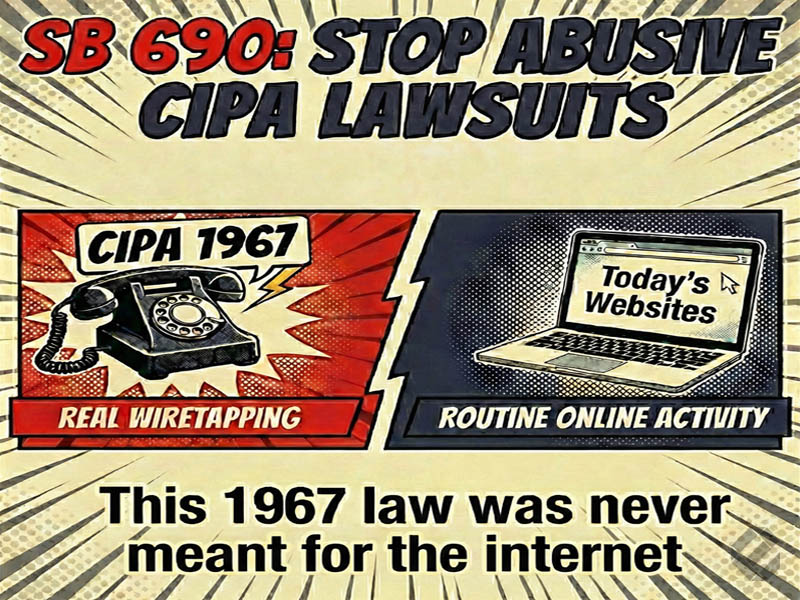
A Major Step Forward: SB 690 Advances Out of Committee to Curb CIPA Shakedowns
July 6, 2026
We have important news to share in the fight against abusive California Invasion of Privacy Act (CIPA) litigation. On July 1, the California Assembly Committee on Privacy and Consumer Protection heard testimony on Senate Bill 690 (SB 690) and, after adopting a set of amendments authored by the bill's sponsor, voted unanimously to advance it. The amended version was re-referred to the Assembly Committee on Appropriations.…
READ FULL POSTPost categories
- Industry News (6)
- Legal Update (26)
- Legislative Update (88)
- Organization News (5)
- Regulatory Update (68)
REcent Posts
Popular Tags
Ecommerce Innovation Alliance (130) EIA (129) FCC (72) FCC petition (19) Federal Communications Commission (55) Frivolous Lawsuits (20) illegal calls (19) mini-TCPA (26) Notice of Proposed Rulemaking (18) quiet hours (29) robocalls (29) scam phone calls (23) shakedown litigation (27) SMS (37) sms marketing (61) spam calls (29) spam phone calls (20) tariffs (18) TCPA (70) TCPA lawsuits (21) Telephone Consumer Protection Act (54) text messages (41) text messaging (33) text messaging laws (23) tracking technologies (20)