

On April 24, 2025, the Oregon Senate Judiciary Committee held a public hearing on House Bill 3865A, a measure seeking to regulate text messages, and to restrict the time, frequency, and manner of these communications. While the stated goal of protecting consumers from unwanted solicitations is widely supported, representatives from the technology and e-commerce industries testified regarding significant concerns about the bill’s potential for unintended consequences for legitimate businesses and consumers alike.
The Ecommerce Innovation Alliance (EIA) had led the industry’s response to this bill and was on hand for the hearing, which brought together various industry voices to highlight the problems with the bill as passed by the Oregon House. These concerns centered on several key areas: the practical impossibility of determining a mobile phone user’s real-time location, the bill’s impact on communications where consumers have provided express consent, the regulation of emerging technologies like Rich Communication Services (RCS), and the risk of enabling frivolous litigation.
Here are some of the arguments presented by key industry witnesses:
Michael O’Rielly, Former FCC Commissioner
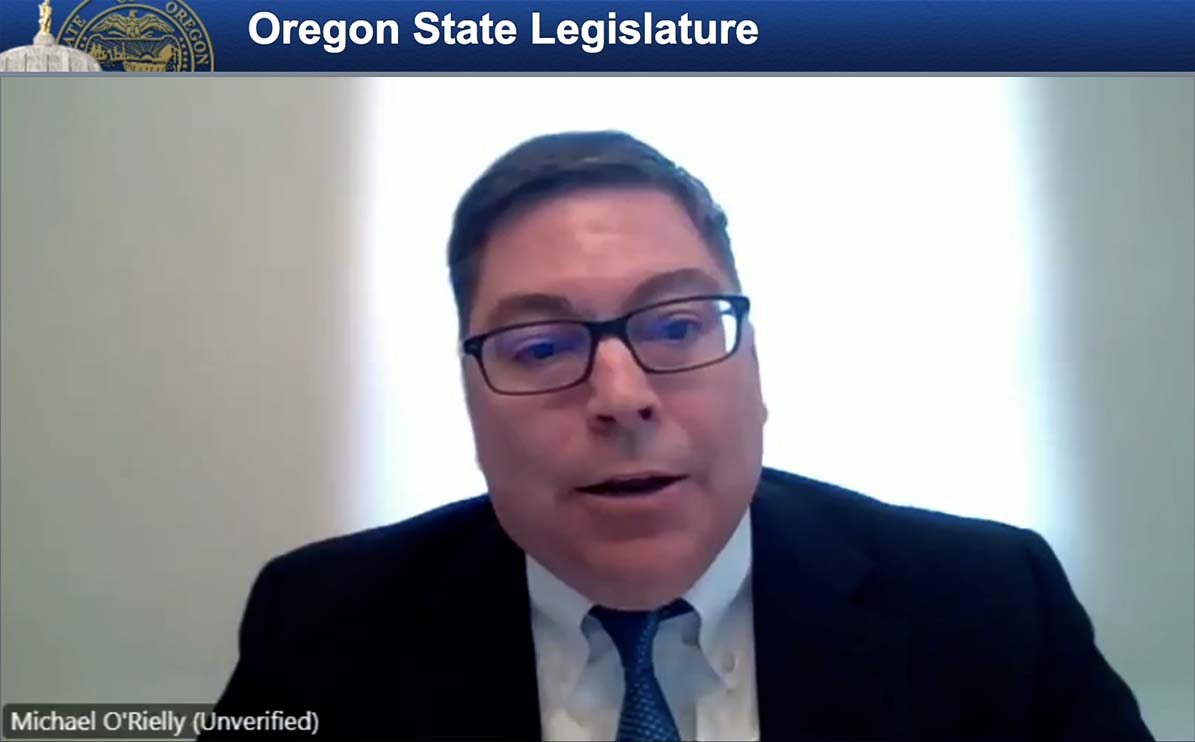
Michael O’Rielly, a former Commissioner at the U.S. Federal Communications Commission (FCC), shared his perspective from years regulating communications. He highlighted that while federal law (the TCPA) aims to shield consumers from unwanted communications, its broad language has sometimes led to opportunistic litigation against law-abiding businesses, including claims based on the time of day a message was delivered, even with prior express written consent.
He emphasized that HB 3865A’s proposed quiet hours, which would restrict solicitations outside 9:00 a.m. to 7:00 p.m., fundamentally undermine the consumer’s right to choose when they receive messages when they have provided prior express written consent. He argued that consumers who consent can simply unsubscribe if they are disturbed by the timing or frequency.
A major technical challenge he noted is the practical impossibility for businesses to determine the precise location of a recipient at the moment a message is sent. Due to welcomed and necessary privacy protections, including the FCC’s enforcement regarding customer proprietary network information (CPNI), wireless carriers no longer share real-time location data with third parties. Imposing state-specific quiet hours (like Oregon’s proposed 7 p.m. end time compared to the federal 9 p.m. standard) based on location becomes a “near impossibility” for legitimate businesses operating across state lines. He noted that the FCC is currently evaluating how quiet hours can be applied in the mobile context.
Mr. O’Rielly also raised concerns about the bill’s attempt to regulate Rich Communication Services (RCS) at the state level, noting that Oregon would be the first state to expressly regulate this technology. He pointed out that the FCC has clarified that RCS is not subject to the federal TCPA. Applying state-specific telemarketing requirements to RCS creates an impractical compliance burden.
He concluded by urging the committee to reconsider these aspects to avoid unintended consequences, suggesting alignment with the federal strategy focused on targeting unconsented messages and supporting network-level blocking of illegal texts.
Chiara McPhee, Chief Product Officer at Postscript and Oregon Resident
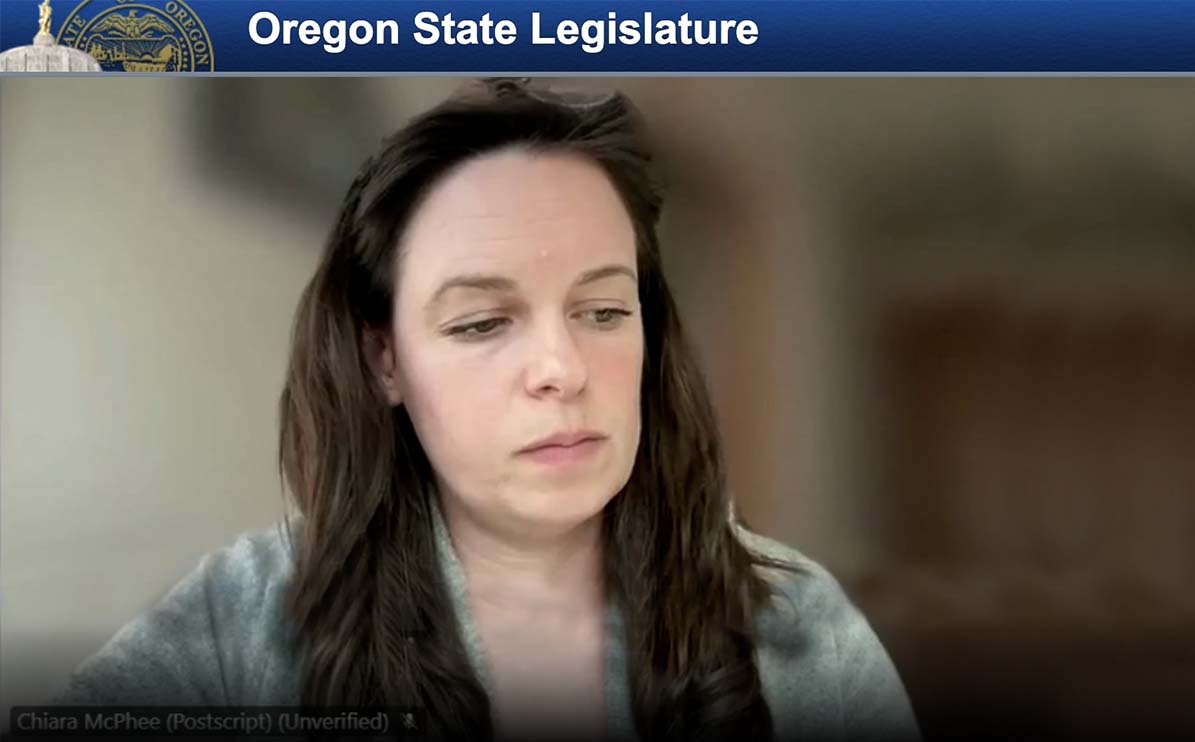
Chiara McPhee, Chief Product Officer for Postscript, a platform used by thousands of e-commerce businesses (many in Oregon) to communicate with customers via SMS, also testified. As an Oregon resident deeply involved in the mobile messaging ecosystem, she brought both technical expertise and local perspective.
Her primary concern was the bill’s proposed quiet hours, starting at 7:00 p.m. Pacific, even for consumers who have explicitly signed up to receive messages. Like Mr. O’Rielly, she stressed that implementing location-based quiet hours is “practically impossible” with the required accuracy. She detailed how historical methods like HLR lookups for inferring location are no longer feasible due to strong federal and state privacy safeguards, including significant FCC enforcement actions against carriers regarding location data sharing. This means neither Postscript nor the businesses they serve can know a mobile subscriber’s real-time location before sending a message.
She argued that applying quiet hours restrictions to consented messages, unlike the federal standard which primarily targets unsolicited messages, overrides clear consumer intent. This difference, combined with the location determination problem, “opens the door to frivolous lawsuits against legitimate businesses,” creating costly burdens, particularly for small and medium-sized businesses (SMBs).
Ms. McPhee also expressed strong concerns about regulating RCS at the state level. She noted that RCS offers richer, more secure communication with features like carrier-approved business identification and branding, making it significantly harder for bad actors to commit fraud. She highlighted that the FCC correctly recognizes RCS as distinct from SMS/MMS and not subject to federal telemarketing rules. Regulating RCS based on location is impractical for national businesses and could stifle the adoption of this beneficial technology. She posited that hindering RCS adoption could ironically “prolong it [fraud] by hindering the adoption of a technology specifically designed with superior anti-fraud mechanisms”.
She urged the committee to consider these practical challenges, particularly for Oregon businesses, and explore alternative approaches that protect consumers without undermining legitimate engagement.
David Carter, President & CEO of the EIA
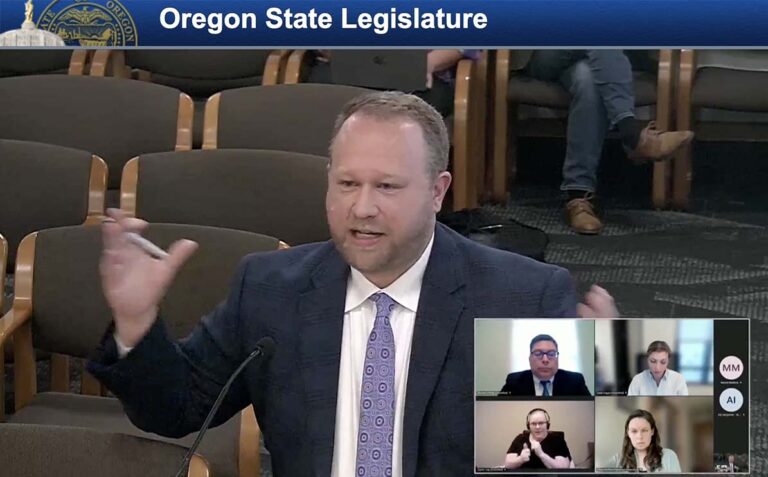
David Carter of the EIA testified, affirming the shared goal of preventing spam and scam texts but expressing “significant concerns about HB 3865 and its potential for unintended consequences for legitimate businesses”. He drew upon experience with similar state laws, noting that the language must be “accurate and it has to be precise” because these laws can be “exploited by professional plaintiffs” generating litigation against law-abiding businesses.
Mr. Carter pointed out that HB 3865 inserts text messages into existing Oregon statutes originally written for voice calls without thoroughly examining each provision. He specifically addressed a question raised by the Committee’s Vice Chair, Senator Thatcher, about how a business could know a phone number’s location for quiet hour compliance and the suggestion by a representative from the Oregon Department of Justice that there was an emerging consensus to allow businesses to rely on area code. He directly disagreed with the suggestion that there is a prevailing opinion or consensus allowing businesses to simply use an area code for compliance. He stated clearly that “there is no such consensus” and highlighted that a petition is pending before the FCC asking that “exact question” in light of FCC restrictions on location privacy. He emphasized that if clarity is to be provided, it will be because the committee takes the time to “write it into the bill”.
Another area of concern for EIA is the differing exceptions and exclusions between the existing solicitation provisions and the autodialer provisions that the bill would interact with. Mr. Carter argued that these exclusions should be “harmonized” and that “prior express consent should be a clear exclusion in every single instance” under the bill. He stated that, as drafted, the bill could create “conflicting exclusions”.
Mr. Carter expressed commitment to continue working on the bill and expressed hope that the necessary refinements can be made in the Senate.
Broader Industry Concerns
These key witnesses’ points were echoed by other industry organizations who submitted written testimony and/or testified orally, including the Voice on the Net Coalition (VON), the Mobile Ecosystem Forum (MEF), and CTIA (the Trade Association for the Wireless Industry).
VON’s written testimony highlighted concerns mirroring those of Mr. O’Rielly and Ms. McPhee regarding RCS regulation, quiet hours deviating from the federal standard, the location determination issue, and the potential for a three-message limit to constrain desired conversational traffic. They also argued that exceptions in the bill should be expanded to include providers of interconnected Voice over Internet Protocol Service (VoIP).
MEF’s written testimony also focused on HB 3865A’s regulation of RCS, emphasizing its role in mitigating SMS spoofing and phishing due to verified sender IDs and stricter vetting. They reiterated that regulating RCS at the state level is problematic, technically difficult due to location privacy issues, and deviates from the FCC’s stance. MEF, too, expressed concern about the 7 p.m. quiet hour and the location determination challenge, especially for consented messages, as well as state-specific disclosure requirements being difficult for national businesses. They warned that the bill’s cumulative effects could stifle innovation and hinder the adoption of beneficial technologies like RCS.
CTIA’s testimony proposed revisions to address concerns. They suggested clarifying the definition of “telephone solicitation” to align with federal law and adding exceptions for entities with consumer consent or an existing business relationship to avoid disrupting wanted messages. CTIA also recommended harmonizing the bill’s quiet hours with the federal 8 a.m. to 9 p.m. standard to avoid confusion and compliance issues. They advocated for ensuring that important non-marketing messages (like utility updates or fraud alerts) are not interrupted by the bill’s automatic dialing provisions and suggested focusing prohibitions on misrepresenting caller ID to intentional misuse.
Conclusion
While acknowledging the important goal of protecting Oregonians from unwanted communications, the industry representatives, including those rallied by EIA, presented a unified front highlighting significant technical and legal challenges posed by HB 3865A in its current form. Key arguments centered on the practical impossibility of complying with location-based restrictions for mobile messages due to privacy regulations, the need to respect consumer consent, the risks of regulating emerging technologies like RCS at the state level, and the potential for enabling frivolous lawsuits against legitimate businesses.
Industry advocates expressed a desire to work constructively with the committee to refine the bill, ensuring it effectively targets bad actors without hindering legitimate communications or creating unworkable compliance burdens for businesses operating in today’s interconnected mobile ecosystem.