
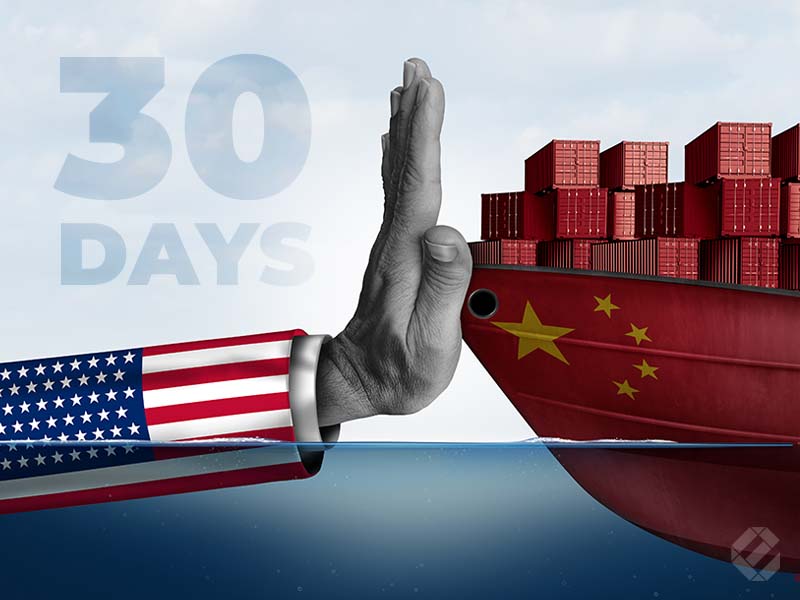
The landscape of international trade for ecommerce businesses has been thrown into further disarray this week, as the Trump administration introduces yet another significant shift concerning the crucial de minimis exception. Just weeks after the “One Big Beautiful Bill” was signed into law, setting a global repeal of de minimis for 2027, a new Executive Order aims to suspend this privilege worldwide much sooner, on August 29, 2025. This rapid succession of policy changes, coupled with a complex legal ruling from the Court of International Trade, creates an unprecedented environment of uncertainty for American ecommerce companies.
Recap: The Vital Role of De Minimis The de minimis exception, codified at 19 U.S.C. § 1321(a), allows goods valued at $800 or less to be imported duty-free into the United States. This provision has been indispensable for a thriving American ecommerce sector, facilitating trade liberalization and providing significant economic benefits through cost savings and reduced transaction costs for businesses and consumers alike. For small and mid-sized U.S.-based ecommerce businesses, including sole proprietors, it reduces import costs, waives duties and administrative fees, streamlines customs processes, and allows them to maintain competitive pricing. This framework has been crucial for creating high-skill jobs and contributing to U.S. tax revenues.
The “One Big Beautiful Bill”: A Scheduled 2027 Repeal On July 4, 2025, President Trump signed the “One Big Beautiful Bill” into law. Significantly for the long term, the bill mandates the repeal of the de minimis shipment exception for commercial shipments worldwide, scheduled to take effect on July 1, 2027. This was already a foundational shift, moving away from a long-standing tool for trade facilitation.
The New Executive Order: An Immediate Global Suspension in August 2025 However, just as businesses began to digest the 2027 timeline, President Trump issued a new Executive Order on July 30, 2025, titled “Suspending Duty-Free De Minimis Treatment for All Countries”. This order declares that the duty-free de minimis exemption “shall no longer apply to any shipment of articles… regardless of value, country of origin, mode of transportation, or method of entry,” with an effective date of August 29, 2025. This dramatically accelerates the elimination of the de minimis privilege on a global basis, directly conflicting with the 2027 repeal date established by the “One Big Beautiful Bill”. The Executive Order cites authority under the International Emergency Economic Powers Act (IEEPA), among other statutes, and asserts that this suspension is “necessary and appropriate to deal with the unusual and extraordinary threats” to national security, foreign policy, and the U.S. economy.
Ongoing Legal Battle: CIT Rules China De Minimis Action Unlawful, Denies Injunction Adding another layer of complexity, this new global suspension comes on the heels of a significant ruling from the U.S. Court of International Trade (CIT) on July 28, 2025. In Axle of Dearborn, Inc. d/b/a Detroit Axle v. Department of Commerce (Case No. 1:25-cv-00091), the plaintiff challenged President Trump’s earlier Executive Order 14256 of April 2, 2025, which attempted to immediately eliminate the de minimis exception for goods from China (including Hong Kong). The Ecommerce Innovation Alliance (EIA) filed an amicus curiae brief in this case, arguing that the government’s action was unlawful and inflicting irreparable harm on American businesses.
The CIT’s decision this week in Axle of Dearborn reiterated its prior findings in V.O.S. Selections, Inc., et al. v. United States (Case No. 25-00066), which invalidated several major tariff programs, including the “Trafficking Tariffs”. The court found that the President exceeded his authority under IEEPA, stating that IEEPA powers “may only be exercised to deal with an unusual and extraordinary threat” and that the orders in question “do not ‘deal with’ their stated objectives,” but instead “aim to create leverage”. This effectively means the court found the President’s actions to end de minimis for China unlawful for exceeding statutory authority.
Despite this finding, the CIT denied Axle of Dearborn’s motion for a preliminary injunction. The court reasoned that V.O.S. Selections had already granted the relief sought by vacating and permanently enjoining the “Trafficking Orders” that implicated the de minimis exemption. However, the crucial caveat is that the U.S. Court of Appeals for the Federal Circuit has stayed that injunction pending appeal in V.O.S. Selections. Therefore, the CIT would not grant “redundant, contingent relief” as any injunction it issued would also be subject to the existing stay. The appeal in V.O.S. Selections was heard by the Federal Circuit en banc today.
The Impact on American Businesses and Consumers Persists This dizzying array of legislative and executive actions, intertwined with ongoing legal battles, creates immense uncertainty for ecommerce businesses. The EIA has consistently highlighted the devastating consequences of eliminating the de minimis exception:
- Increased Costs: Small and mid-sized ecommerce businesses face substantial increases in costs due to duties, Merchandise Processing Fees (MPF), and customs broker fees, threatening their viability.
- Administrative Burdens: The loss of simplified customs procedures will divert time and capital from core business activities, stifling innovation.
- Price Hikes for Consumers: Economic analyses suggest billions of dollars in added annual costs for consumers, disproportionately affecting lower-income households.
- Job Losses: CBP’s own analysis predicted net job losses between 97,000 and 136,000 jobs in the first year alone due to proposed rule changes.
The EIA firmly believes that while legitimate concerns regarding illicit trade and intellectual property violations need to be addressed, a blanket elimination of the de minimis exception, especially with such conflicting timelines and legal challenges, is a harmful and disproportionate solution.
The EIA will continue to closely monitor these developments, advocating strongly for policies that promote a stable and predictable trade environment essential for ecommerce growth. We will work to ensure that the voice of American ecommerce businesses is heard amidst these rapid and complex changes.Join the EIA today to help strengthen and shape policies that affect all ecommerce businesses. Together, we can continue to create the future of ecommerce. Subscribe to EIA email updates to stay informed on key developments and their impact on your business.