
The long-anticipated next step in the tariff refund process is here. On Monday, April 20th, the Trump administration, in coordination with U.S. Customs and Border Protection (CBP), launched the Claims for Adjustment Portal for Entries (CAPE) refund portal. This opens the door to what could total up to $166 billion in tariff refunds tied to duties imposed under the International Emergency Economic Powers Act (IEEPA).
For ecommerce businesses, this is a real opportunity to recover capital—but one that requires action and, in many cases, technical expertise.
How We Got Here
This development follows a series of major legal decisions that the Ecommerce Innovation Alliance (EIA) has been tracking closely.
As we’ve previously covered:
- In September 2025, the SCOTUS granted certiorari for Trump, President of U.S. v. V.O.S. Selections, Inc. and Learning Resources, Inc v. Trump, President of U.S. Those cases were consolidated an then heard by the Supreme Court in November 2025.
- In February 2026, The Supreme Court ruled that IEEPA cannot be used to impose tariffs.
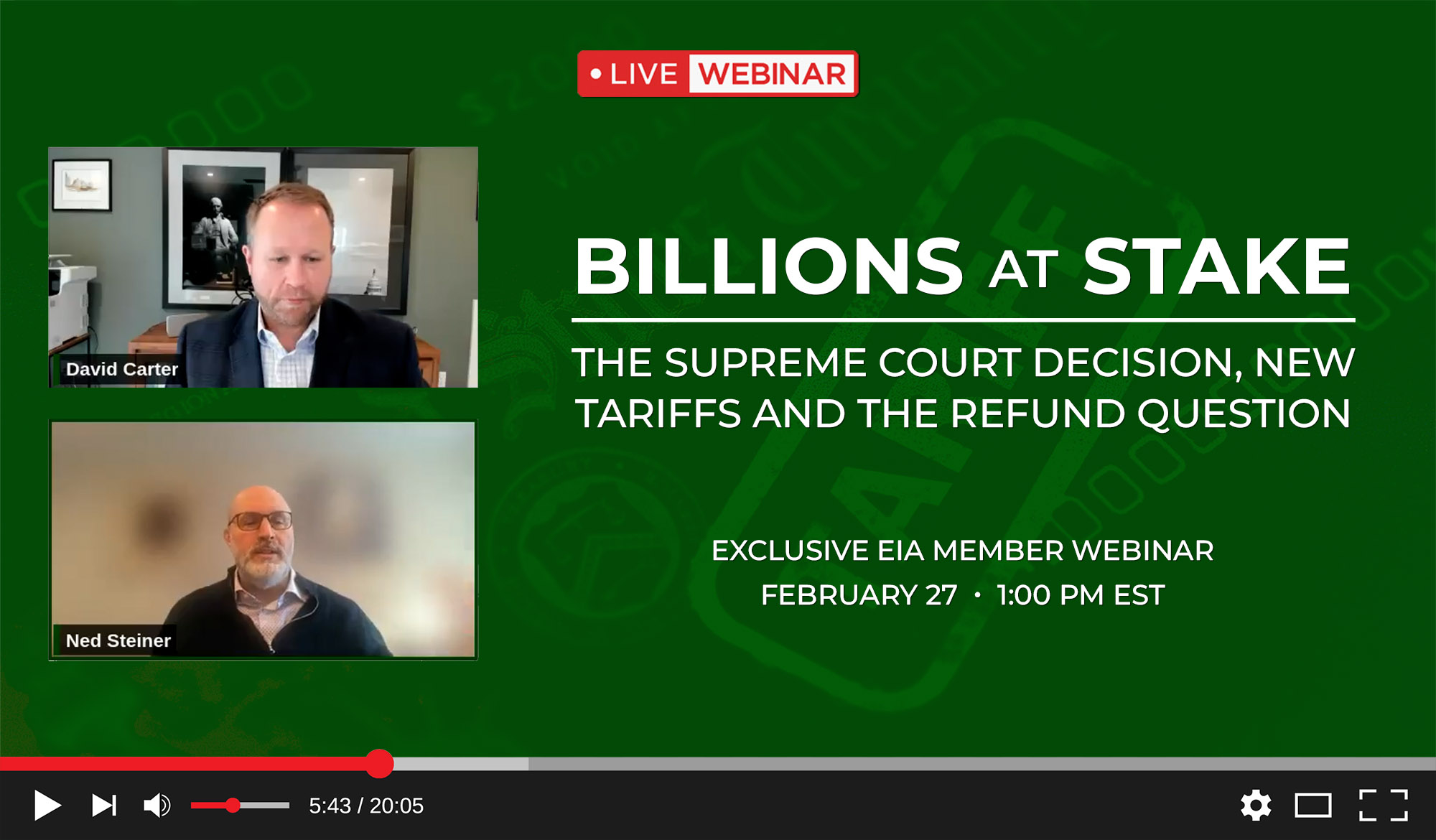
- In late February, we hosted a member webinar, “Billions at Stake: The Supreme Court Decision, New Tariffs and the Refund Question,” breaking down what the ruling meant in practice, how the Administration was responding and what pathways for refunds could look like.
- In March 2026, the U.S. Court of International Trade subsequently ordered refunds of improperly collected duties. Although implementation details and how businesses would actually claim those refunds remained unclear at that time.
What Is CAPE and How Do You Access It?
The Claims for Adjustment Portal for Entries (CAPE) is CBP’s system for submitting tariff refund claims—but it is not a standalone public website. Instead, CAPE operates within CBP’s Automated Commercial Environment (ACE), the platform used by importers and customs brokers to manage trade filings.
Businesses can learn more through CBP’s resources:
- CBP program page: https://www.cbp.gov/trade/programs-administration/trade-remedies/ieepa-duty-refunds
- Trade Information Notice (guidance PDF): https://www.cbp.gov/sites/default/files/2026-04/trade_information_notice_cape_508c.pdf
For companies unfamiliar with ACE, this is a technical, compliance-driven process—not a self-service refund form. Access requires an ACE account – there is no simple “submit here” public portal. Most ecommerce businesses will work through a customs broker or trade advisor to file claims.
For many ecommerce businesses—especially small and mid-sized importers—IEEPA tariffs created real margin pressure. CAPE presents a chance to recover those funds and improve financial flexibility. But it also introduces a layer of complexity, requiring businesses to revisit past imports, gather documentation, and navigate CBP processes. But for many, this will not be a DIY effort.
CBP has described the launch of CAPE as “Phase 1.” At this stage, CAPE is focused on processing claims tied specifically to IEEPA-related tariffs covered by recent court rulings. Additional phases are expected to expand or refine the process, though details remain limited.
Who Is Eligible?
CAPE is designed for the entity that actually paid the tariffs—typically the importer of record (IOR). For ecommerce businesses, that may include brands importing inventory directly, private-label sellers managing their own customs entries or companies that paid duties on bulk shipments.
If your business relied on a marketplace, 3PL, or logistics provider, eligibility will depend on how those imports were structured and who was listed as the importer of record. This is a critical distinction and should be confirmed early.
What About Consumers?
Individual consumers cannot file claims directly through CAPE. However, some large companies are already exploring ways to pass refunds downstream. Reports indicate companies like FedEx and Costco may return funds to customers where tariffs were embedded in pricing.
For ecommerce brands, this creates a strategic decision: whether to retain refunds to offset prior costs or pass some value back to customers.
What to Do Now
With the process now live, timing matters. Ecommerce businesses should begin reviewing past imports to identify IEEPA-related tariff payments, confirm importer-of-record status, and gather relevant documentation.
Engaging a customs broker or trade expert will likely be essential—particularly for businesses without direct ACE access.
At the same time, businesses should monitor future updates. As CBP rolls out additional phases, eligibility or processes may expand.
The Bottom Line
The launch of CAPE marks a critical turning point in the tariff refund process—but it is only the beginning. Act now on what’s available—and be prepared for what comes next.
For ecommerce businesses that paid tariffs, this is a time-sensitive opportunity to recover funds. At the same time, the structure of the system means this is a technical process that will require attention, coordination and in many cases, outside support.
The EIA will continue to monitor developments and provide guidance as the tariff refund process evolves.
Join the EIA today to help strengthen and shape policies that affect all ecommerce businesses. Together, we can continue to create the future of ecommerce. Subscribe to EIA email updates to stay informed on key developments and their impact on your business.
Ecommerce Innovation Alliance provides members with analysis of litigation and regulatory developments affecting online commerce and digital marketing. This post is for informational purposes only and does not constitute legal advice.
Watch Webinar Replay
Watch the video replay of our webinar “Billions at Stake: The Supreme Court Decision, New Tariffs and the Refund Question” to learn more about the recent Supreme Court IEEPA decision. We discuss in detail what the Supreme Court’s decision actually changes, how the Administration has responded since, the pathways for potential refunds and much more.