In February, the U.S. Supreme Court delivered a landmark decision that reshaped the legal landscape for tariffs imposed under the International Emergency Economic Powers Act (IEEPA). The Court ruled that IEEPA cannot be used as authority to impose tariffs, invalidating a key legal basis for certain trade measures.
Since that decision, the focus has shifted from whether the tariffs were lawful to what happens next—particularly whether businesses will receive refunds for tariffs they already paid.
Over the past two weeks, new developments from the U.S. Court of International Trade (CIT) and U.S. Customs and Border Protection (CBP) have begun to clarify how that process may unfold. For ecommerce brands and import-dependent businesses, these updates could have significant financial implications.
What Happened After the Supreme Court’s Tariff Ruling
- February 20: Supreme Court Invalidates IEEPA Tariffs
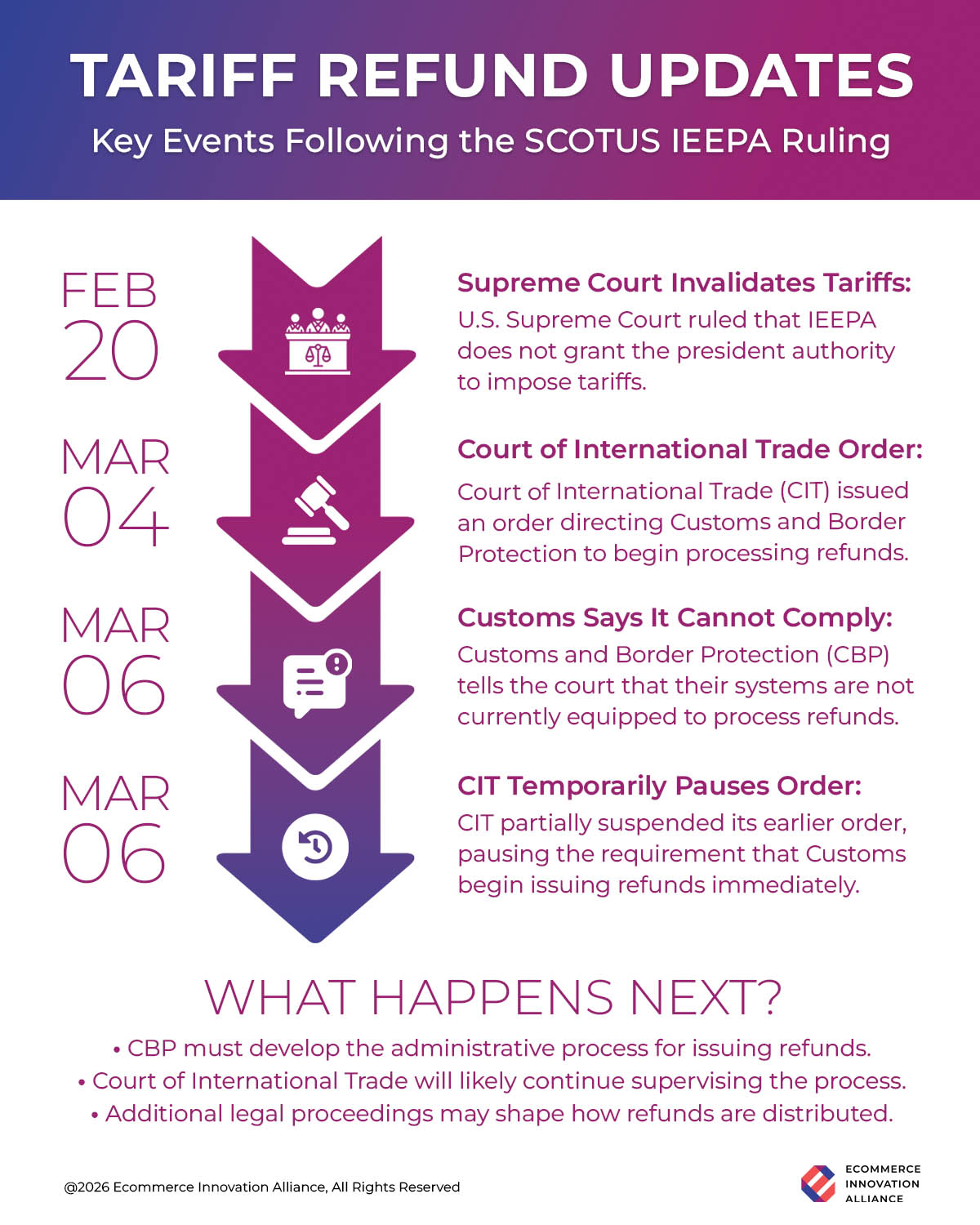
On February 20, the U.S. Supreme Court ruled that IEEPA does not grant the president authority to impose tariffs, a decision that invalidated a range of tariffs that had been imposed under the statute. EIA covered the ruling in detail in our previous post “Supreme Court Rules IEEPA Cannot Be Used to Impose Tariffs.”
The decision immediately raised a critical question for businesses: would the government refund tariffs already collected under the now-invalidated authority?
- March 2: Federal Circuit Clears Path for Refund Oversight
On March 2, the U.S. Court of Appeals for the Federal Circuit issued a ruling that cleared the way for the U.S. Court of International Trade (CIT) to begin overseeing the implementation of tariff refunds following the Supreme Court’s February decision. The ruling removed a procedural barrier that had temporarily delayed the trade court’s ability to act on the issue, allowing the CIT to move forward with orders addressing how refunds for the invalidated IEEPA tariffs should be handled.
- March 4: Trade Court Orders Tariff Refund Process
On March 4, Judge Richard Eaton of the U.S. Court of International Trade issued an order directing Customs and Border Protection to begin processing refunds for tariffs collected under the invalidated IEEPA authority. The order effectively pushed the federal government to begin implementing the Supreme Court’s ruling by returning funds that importers paid under the unlawful tariff regime. For businesses that paid those duties—including many ecommerce brands importing consumer products—the decision represented a potential path toward recovering significant costs.
- March 6: Customs Says It Cannot Immediately Comply
Just two days later, Customs and Border Protection told the court it could not immediately comply with the order. According to CBP, the agency’s systems are not currently equipped to process refunds related to the invalidated tariffs and would require approximately 45 days to implement a workable refund mechanism. This response highlighted a practical reality: even after a major court decision, the administrative process of unwinding tariffs can be complex and time-consuming.
- March 6: Court Temporarily Pauses Immediate Compliance
Later that day, Judge Richard Eaton held a closed conference in Atmus Filtration, Inc. v. United States to continue the court’s process for determining how tariffs imposed under the IEEPA should be refunded to importers of record. During the conference, the court considered CBP’s declaration outlining limitations and operational challenges that would prevent the agency from immediately processing tariff refunds.
Following the meeting, the CIT partially suspended its earlier order, specifically pausing the requirement that Customs begin issuing refunds immediately. The court stated that the suspension applies “to the extent that it directs immediate compliance,” effectively giving the government additional time to establish a workable refund process. In other words, the court did not reverse its position that refunds are required—it acknowledged the logistical challenges CBP described and allowed time for the agency to develop the systems needed to implement the refunds.
What This Means for Ecommerce Businesses
For ecommerce businesses and brands that import goods, tariffs often represent a significant portion of landed costs. Many companies paid duties under the IEEPA tariffs that are now being challenged and recovering previously paid duties could represent meaningful financial relief. Refunds may ultimately be issued, but the process is still being worked out. Key implications for ecommerce importers include:
Potential tariff refunds
Companies that paid tariffs under the invalidated authority may eventually receive refunds, depending on how the final implementation process is structured.
Delayed timelines
Even if refunds are ultimately required, businesses should expect the process to take time as Customs develops the necessary systems.
Ongoing legal oversight
The Court of International Trade appears poised to maintain oversight of the refund process as it develops.
What Happens Next
Several key questions remain unresolved. First, Customs and Border Protection must develop the technical and administrative process for issuing refunds. The agency has indicated it may need roughly 45 days to implement a system capable of handling the refunds.
Second, the Court of International Trade will likely continue supervising the process, ensuring that the Supreme Court’s ruling is ultimately implemented.
Finally, additional legal proceedings could still shape how refunds are calculated and distributed, particularly in cases involving complex import records or multiple tariff entries.
EIA Will Continue Tracking Developments
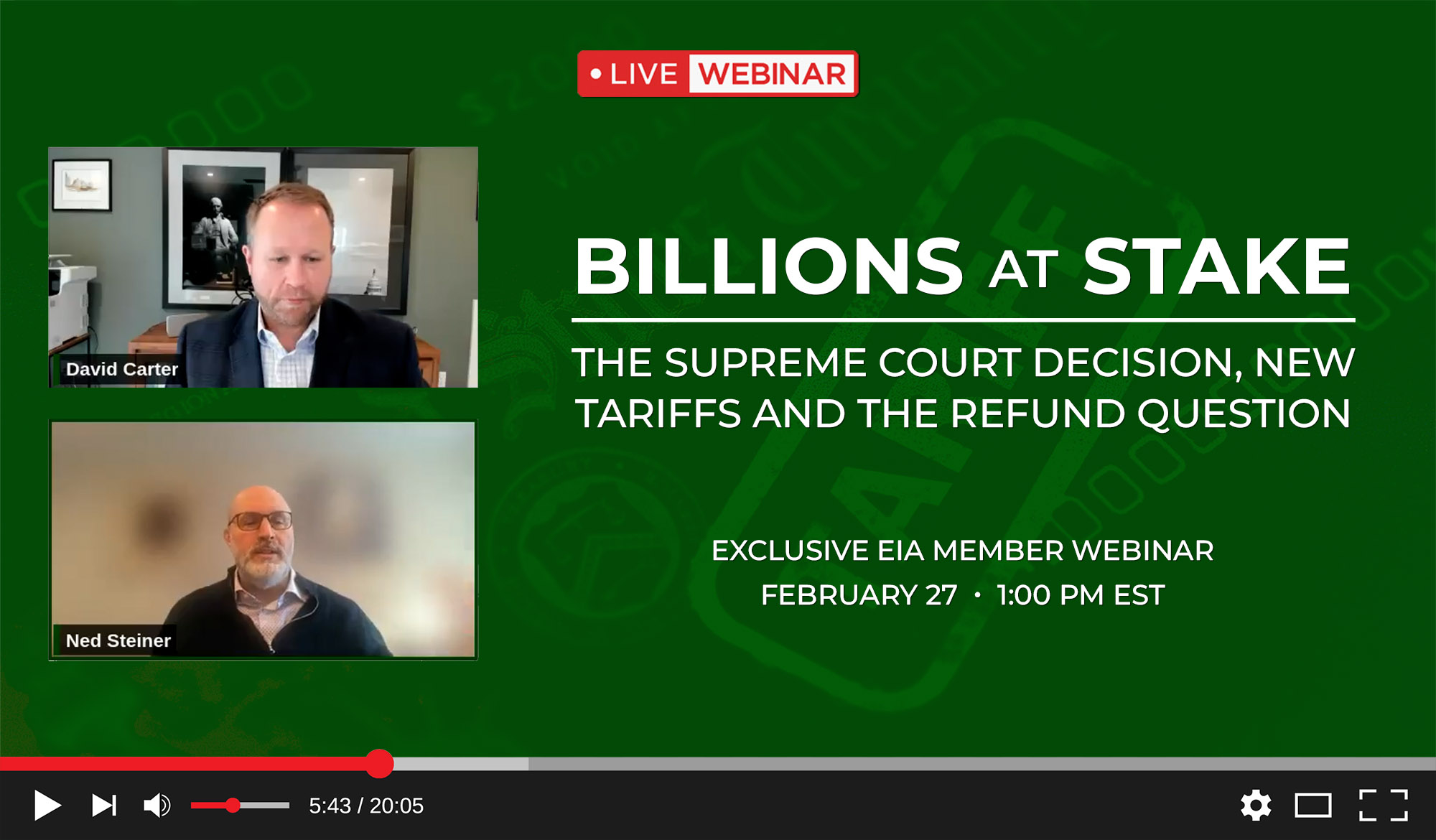
EIA has been closely monitoring the IEEPA tariff litigation and its impact on ecommerce businesses. Following the Supreme Court’s February decision, we hosted a member webinar explaining the ruling and what it could mean for importers.
We will continue providing updates as courts and federal agencies determine how the refund process will move forward.
Join the EIA today to help strengthen and shape policies that affect all ecommerce businesses. Together, we can continue to create the future of ecommerce. Subscribe to EIA email updates to stay informed on key developments and their impact on your business.
Ecommerce Innovation Alliance provides members with analysis of litigation and regulatory developments affecting online commerce and digital marketing. This post is for informational purposes only and does not constitute legal advice.
Watch Webinar Replay
Watch the video replay of our webinar “Billions at Stake: The Supreme Court Decision, New Tariffs and the Refund Question” to learn more about the recent Supreme Court IEEPA decision. We discuss in detail what the Supreme Court’s decision actually changes, how the Administration has responded since, the pathways for potential refunds and much more.