

Federal Judge Rejects CIPA Pixel Lawsuit Lacking Evidence of Genuine Privacy Harm
July 9, 2026
For the past several years, ecommerce businesses have faced an onslaught of lawsuits targeting the routine use of website analytics and advertising technologies. Plaintiffs' attorneys have increasingly relied on the California Invasion of Privacy Act (CIPA) to argue that common website tracking tools constitute unlawful surveillance, even when they collect only standard browsing information. Many of these lawsuits have followed a familiar pattern: broad allegations, little evidence of actual harm, and significant pressure on businesses to settle rather than endure expensive litigation.…
READ FULL POST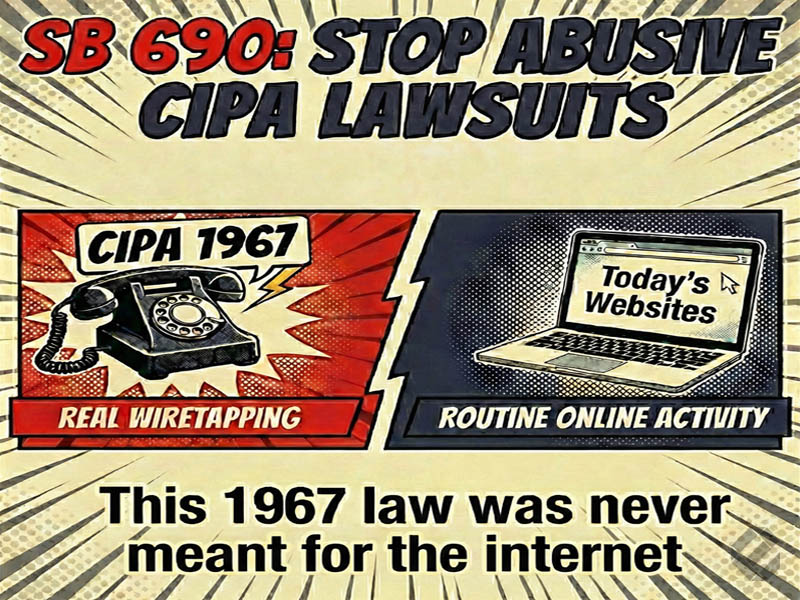
A Major Step Forward: SB 690 Advances Out of Committee to Curb CIPA Shakedowns
July 6, 2026
We have important news to share in the fight against abusive California Invasion of Privacy Act (CIPA) litigation. On July 1, the California Assembly Committee on Privacy and Consumer Protection heard testimony on Senate Bill 690 (SB 690) and, after adopting a set of amendments authored by the bill's sponsor, voted unanimously to advance it. The amended version was re-referred to the Assembly Committee on Appropriations.…
READ FULL POST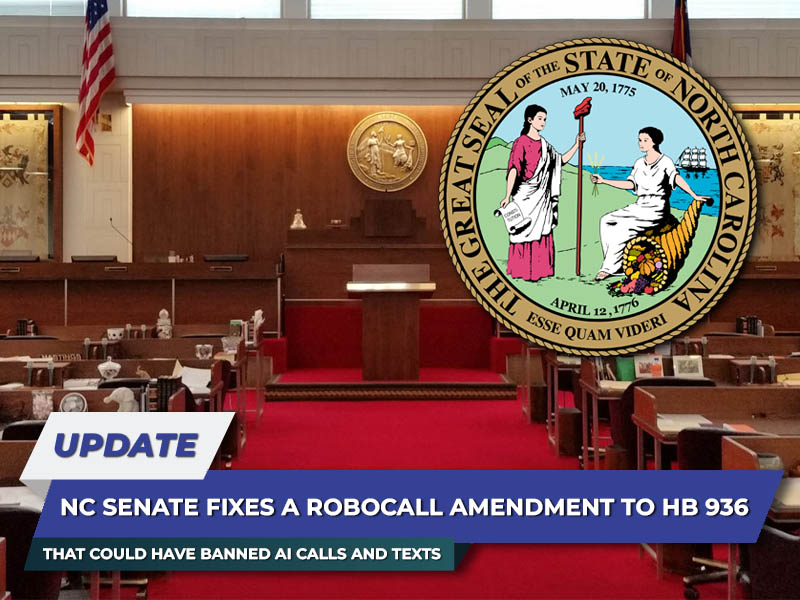
NC Senate Fixes a Last-Minute Robocall Amendment to HB 936 That Could Have Banned AI Calls and Texts — Even With Consumer Consent
June 18, 2026
When the North Carolina House sent House Bill 936, “Robocall Solicitation Modifications,” to the Senate last year, it did so unanimously — 110-0. The bill that left the House was a measured update to the state’s telephone solicitation laws, and the House had already worked with EIA and other business groups to adopt an amendment removing the problematic one-to-one consent requirement we wrote about previously. It looked like a clean story.…
READ FULL POST

Post categories
- Industry News (6)
- Legal Update (26)
- Legislative Update (88)
- Organization News (5)
- Regulatory Update (68)
REcent Posts
Popular Tags
Ecommerce Innovation Alliance (130) EIA (129) FCC (72) FCC petition (19) Federal Communications Commission (55) Frivolous Lawsuits (20) illegal calls (19) mini-TCPA (26) Notice of Proposed Rulemaking (18) quiet hours (29) robocalls (29) scam phone calls (23) shakedown litigation (27) SMS (37) sms marketing (61) spam calls (29) spam phone calls (20) tariffs (18) TCPA (70) TCPA lawsuits (21) Telephone Consumer Protection Act (54) text messages (41) text messaging (33) text messaging laws (23) tracking technologies (20)
Layoffs Hit PLG Damages Attorneys, The Firm Is Behind A Recent Surge of Quiet-Hours Litigation
Ecommerce Innovation Alliance
June 23, 2026
The firm behind the new quiet-hours filing campaign we have been tracking has gone through a round of layoffs across both its California and Florida operations according to Faythe Gutierrez, the attorney whose California filings first put the firm on our radar. Ms. Gutierrez confirmed to EIA that she was part of the layoffs.…
READ FULL POST