

After the Midterms: What Tuesday’s Elections Could Mean for Ecommerce
November 5, 2026
Tuesday’s midterm elections will bring a new balance of power to Washington in January. Democrats will hold majorities in both the House and the Senate, and voters in several states also reshaped their legislatures. For ecommerce merchants, the change will shape how lawmakers approach AI and consumer messaging and the litigation abuse that increasingly comes with them. Here is what happened and what it could mean for online businesses.…
READ FULL POST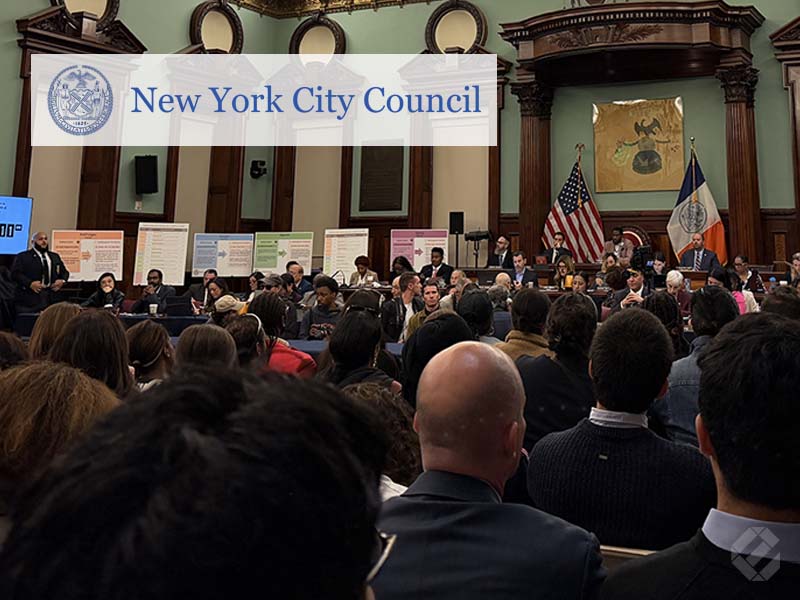
NYC Council Weighs AI Rules That Would Reach Every Brand That Texts Its Customers
October 6, 2026
On Oct 5th, the New York City Council’s Committee of the Whole, chaired by Speaker Julie Menin and Co-Chair Carmen De La Rosa, held an oversight hearing on the risks posed by artificial intelligence. Alongside it, the Committee heard ten AI-related bills. Five of them would regulate how private businesses use and talk about AI. EIA President and CEO David Carter testified on behalf of EIA members, including roughly 20,000 brands, mostly small and mid-size businesses, that serve New Yorkers every day. …
READ FULL POST
California Requires Disclosures for AI-Generated Performers in Video and Audio Ads
October 5, 2026
California is putting new disclosure rules around a growing advertising trend: the use of realistic AI-generated people and voices to sell products and services. Gov. Gavin Newsom signed Senate Bill 1050 on September 16, making California the second state after New York to require disclosures when certain advertisements use AI-generated “synthetic performers.” The new California law takes effect January 1, 2027.…
READ FULL POST
The AI Disclosure Bill Merchants Should Be Watching: A Look at the QUIET Act Ahead of This Week’s Subcommittee Hearing
July 20, 2026
On Wednesday, July 22nd, the House Energy & Commerce Subcommittee on Communications and Technology will hold a legislative hearing titled "Protecting Communications Networks and Improving Connectivity" in 2123 Rayburn. Chairmen Brett Guthrie (KY-02) and Richard Hudson (NC-09) announced the hearing on July 15, framing it around three goals: protecting Americans from foreign threats like China, cracking down on illegal robocalls and scammers, and expanding broadband access.…
READ FULL POST
One AI Framework or Fifty? Why Federal Policy Could Define the Future of Artificial Intelligence Compliance for Ecommerce
March 24, 2026
Artificial intelligence (AI) is already deeply embedded across e-commerce operations from personalization and product recommendations to marketing, customer service, and fraud prevention. Over the past week, federal policymakers took two steps that could signal a shift in how the United States is approaching artificial intelligence (AI) regulation. But while momentum is clearly building, the path forward remains far from settled.…
READ FULL POST
The AI Patchwork Problem: How State-by-State AI Laws Could Complicate Ecommerce
March 9, 2026
Artificial intelligence is quickly becoming a core technology for e-commerce. From customer service chatbots and marketing automation to fraud detection and inventory forecasting, AI tools are now embedded in many of the systems online businesses rely on to compete and grow. But as AI adoption accelerates, policymakers are facing a key question: who should regulate it?…
READ FULL POSTPost categories
- Industry News (11)
- Legal Update (28)
- Legislative Update (99)
- Organization News (6)
- Regulatory Update (77)
REcent Posts
Popular Tags
California Consumer Privacy Act (22) California Privacy Protection Agency (22) CCPA (21) CPPA (22) Ecommerce Innovation Alliance (151) EIA (150) FCC (78) Federal Communications Commission (61) mini-TCPA (27) quiet hours (31) robocalls (33) scam phone calls (26) shakedown litigation (30) SMS (39) sms marketing (67) spam calls (32) spam phone calls (22) TCPA (77) TCPA lawsuits (24) telemarketing laws (24) Telephone Consumer Protection Act (59) text messages (43) text messaging (35) text messaging laws (24) tracking technologies (27)